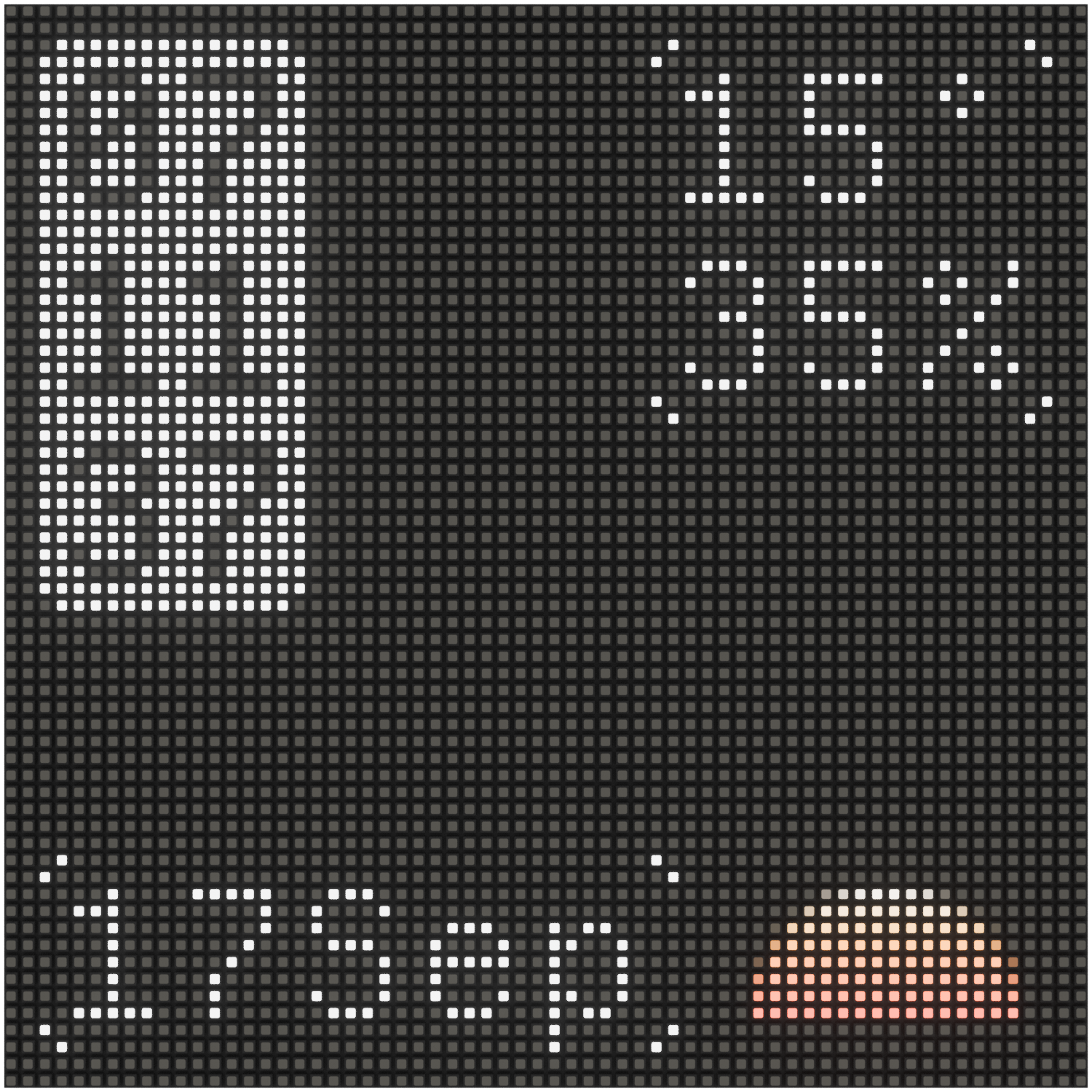
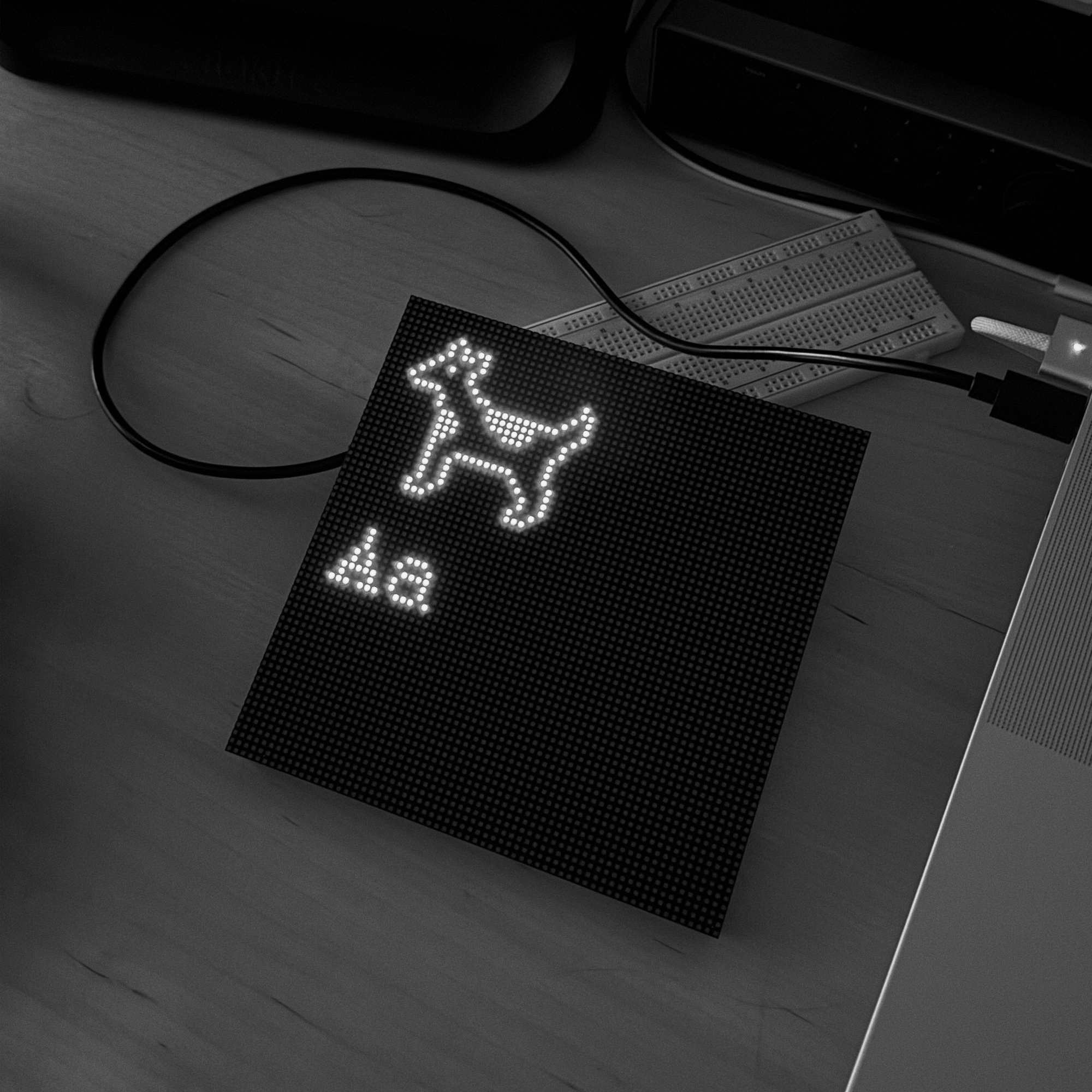
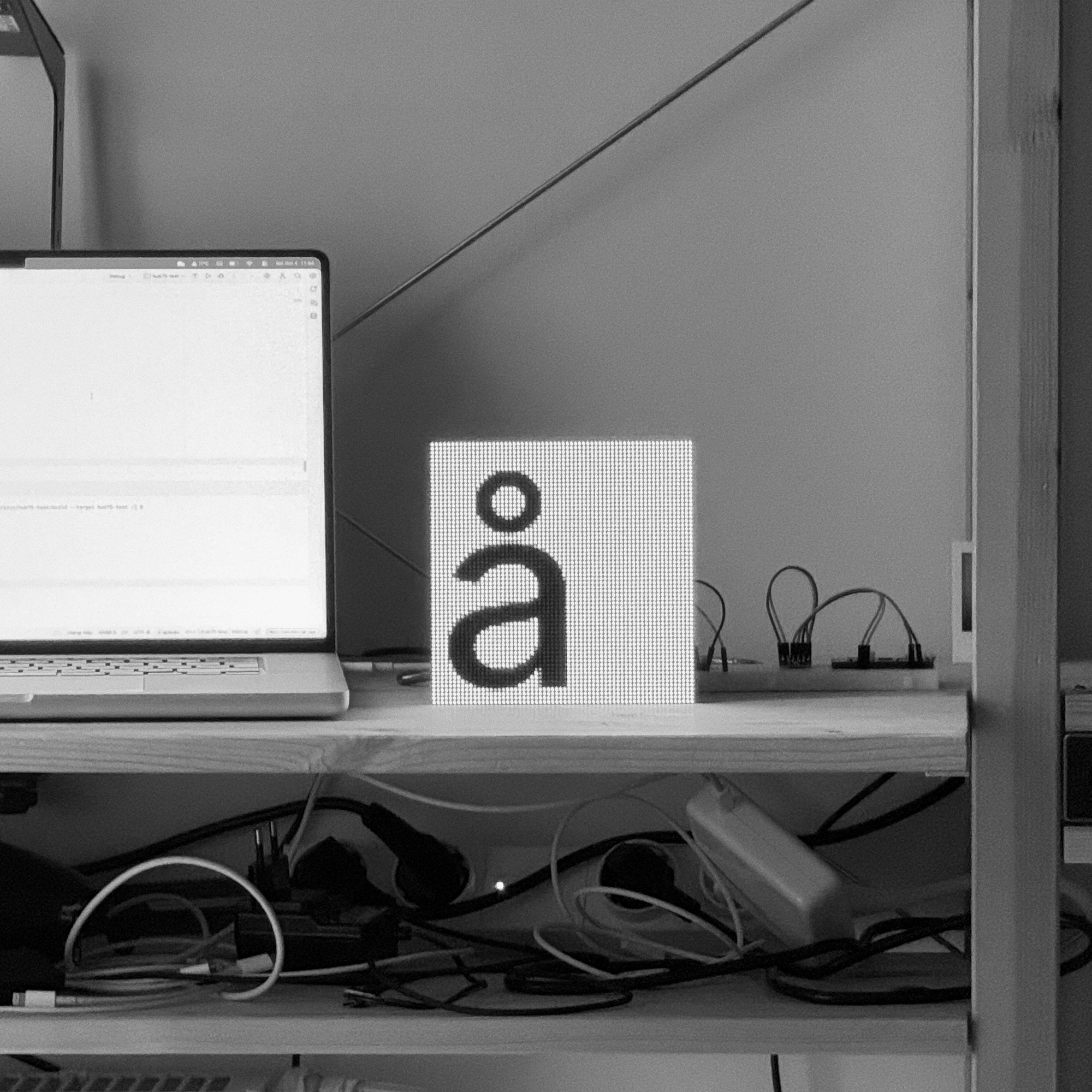
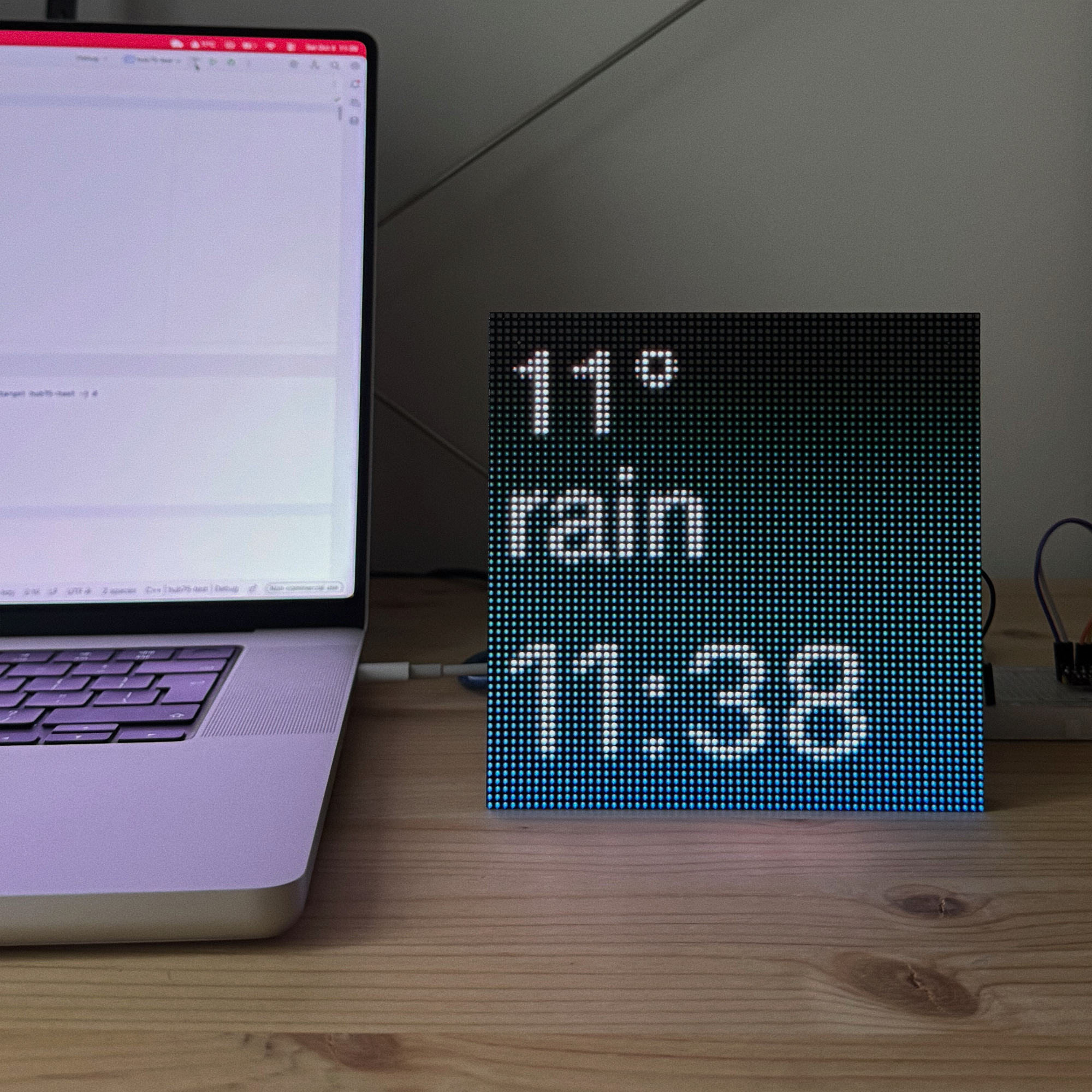
An ongoing exploration of a 64×64 RGB LED matrix in a home setting. Can something as raw as a panel, used to build large-format screens, be appreciated in households?
I wanted a quick glance at the essentials when leaving home in the morning - time, weather and metro or bus departures. Just as much, I simply wanted to build something.
The current prototype is fully functional and runs on a single Raspberry Pi Pico W. Once proven, the plan is to publish it as open source.
E-ink displays
An e-ink display was my first pick. Though it has a much greater pixel density, I abandoned it because of its full-screen refresh and pixel ghosting.
RGB LED matrix
I chose to try the LED panel, both to challenge myself with low-resolution, lo-fi typography and for the possibility of showing color.
Driving the panel
A Raspberry Pi Pico W fetches data from the internet and drives the HUB75 panel through its PIO state machines, so everything runs on a single device.
Rendering fonts
I tried rendering modern fonts such as Inter on a JavaScript server and sending them to the display, but this added another point of failure and another thing to maintain. I stayed lo-fi with pixel fonts converted to work with my C++ code. I tried the Courier font from the original Macintosh, and I'm currently using Departure Mono.
Layout and widgets
The layout consists of simple widgets - time, real-time weather and date. I'm currently working on sun chart and metro and bus departures.
Pixel typography
A font that looks good on a computer screen, where pixels touch, reads differently on an LED matrix, where every pixel is a separate point of light. I'm still exploring my options.
No enclosure
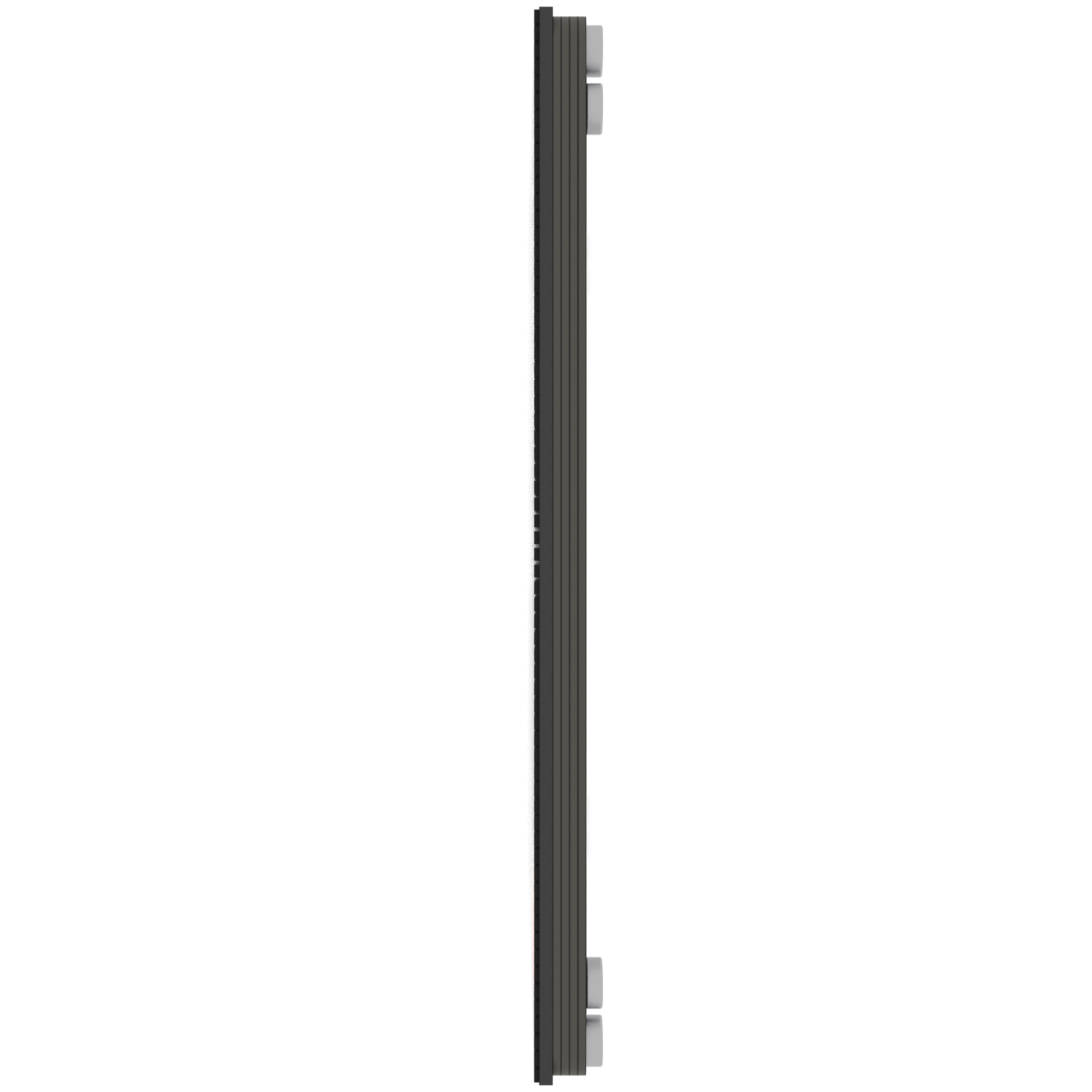
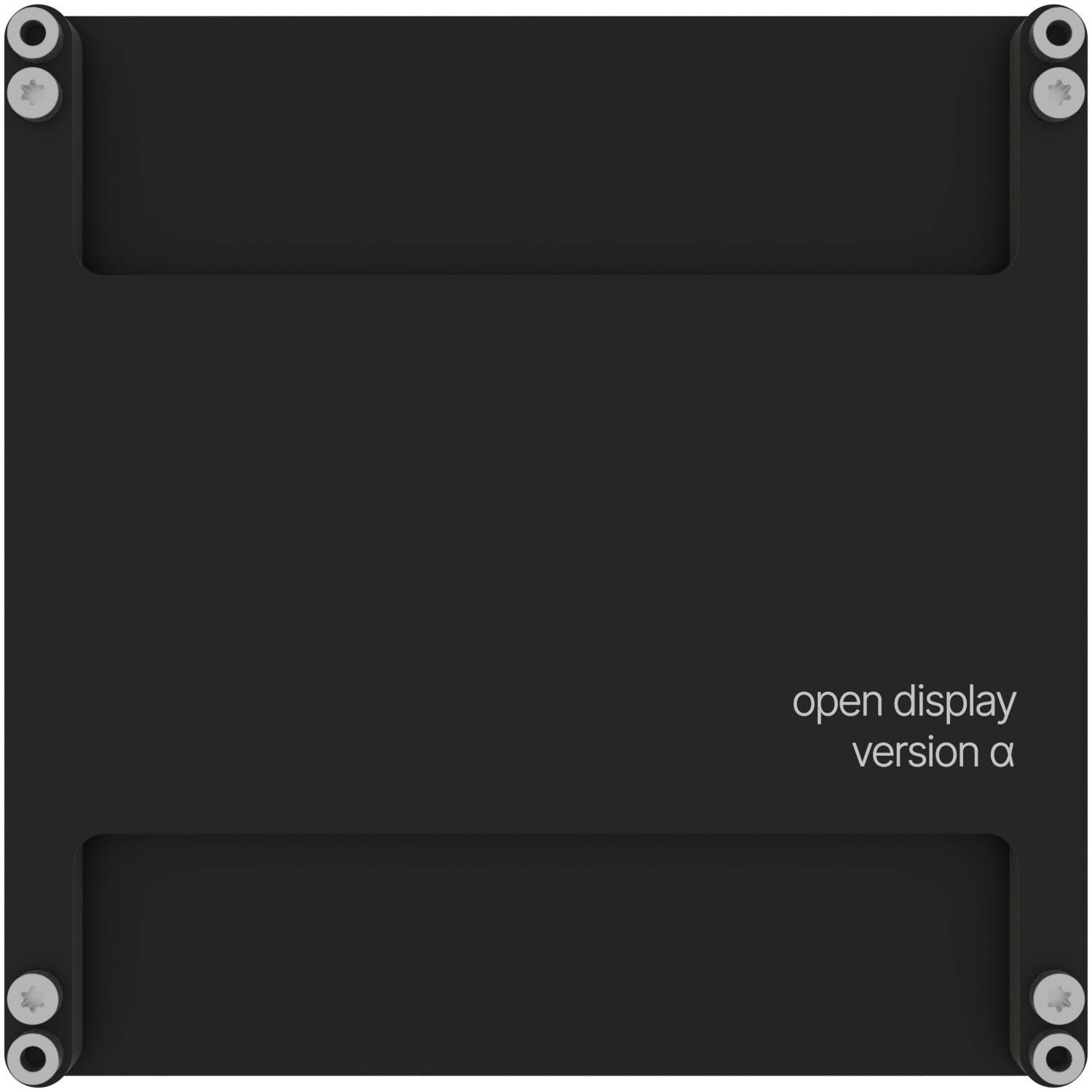
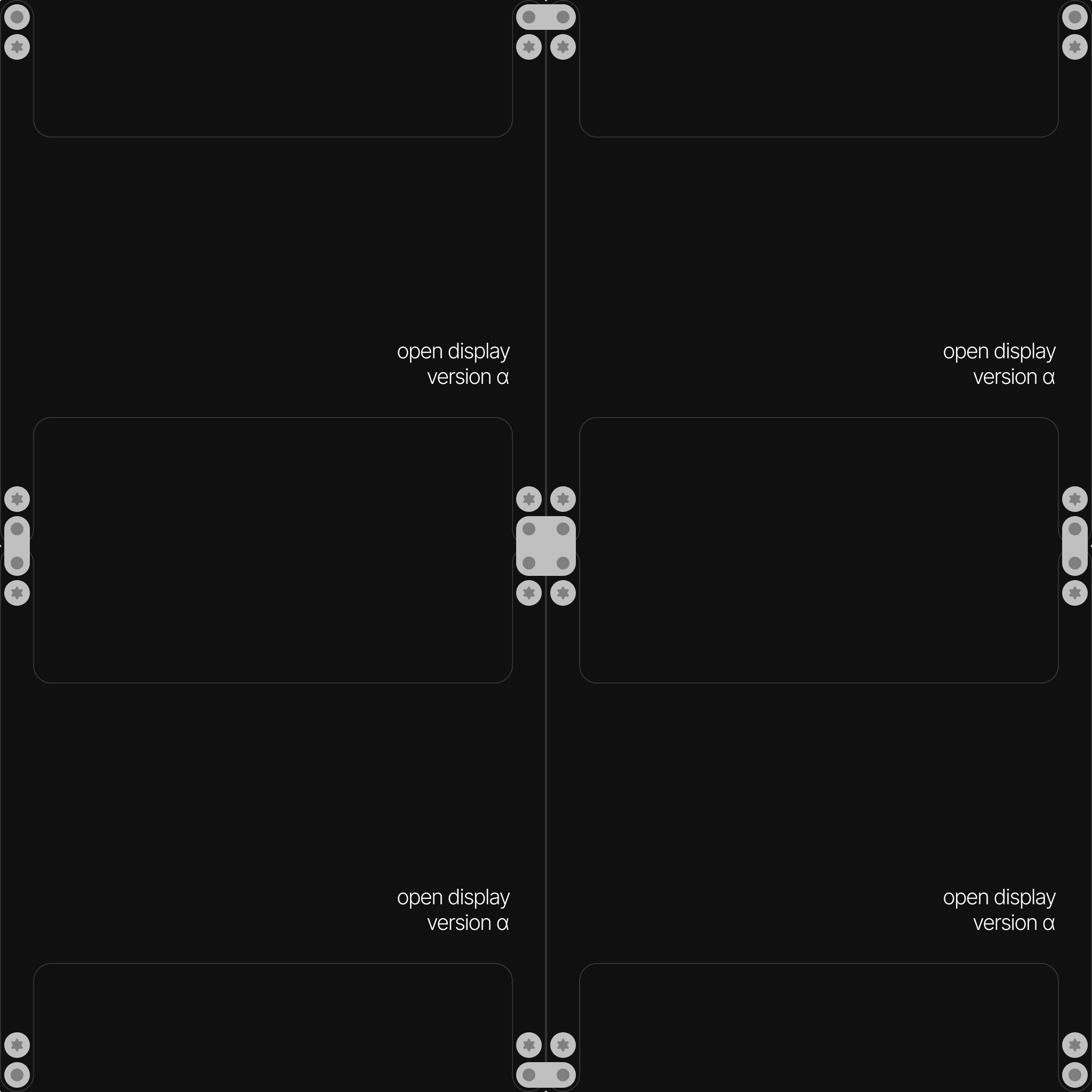
There is no enclosure by choice. The panel will sit on a stack of PCBs that keeps the open and raw look, mildly wrapped to hide some of the LED panel components. opendisplay can be either standing or mounted on a wall.
Linking panels
The stack is designed so that multiple panels can link together into higher resolutions and different shapes. So far it is a rough 3D model that handles mounting.
Pogo pin connection
The boards will connect to each panel through pogo pins soldered in place of its factory HUB75 headers.